5-Star Rated Huntington Beach, CA Same-Day Available
Paint Correction Service by Huntington Beach Mobile Detailing
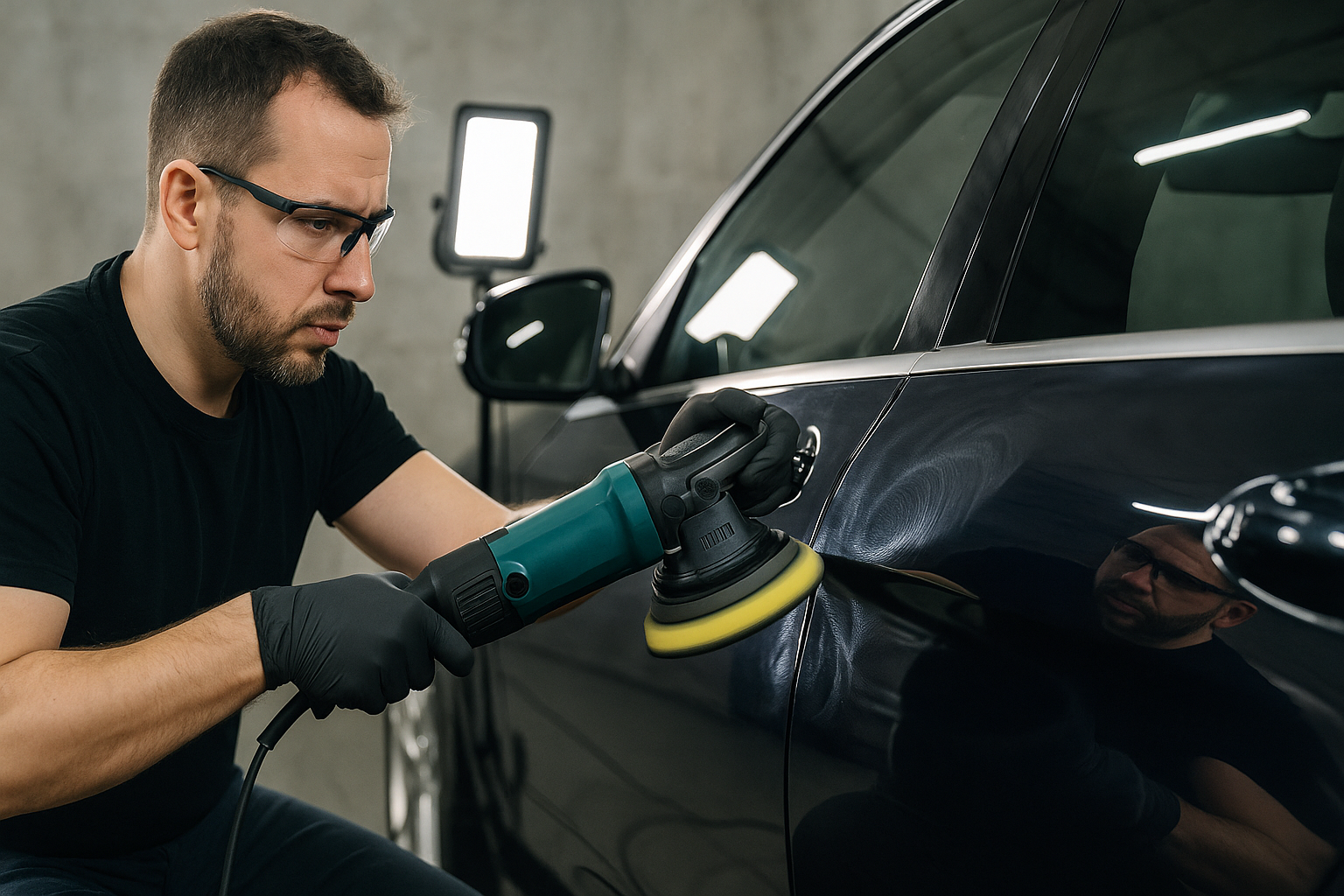
Vehicle paint correction that refines the clear coat to reduce swirls, haze, oxidation, water spots, and light scratches for higher gloss and clearer reflections.
Get a Free QuoteWe'll call you back within 30 minutes
✓
We'll call you back shortly!
Expect a call within 30 minutes, or reach us now at +1 (714) 988-4198.
Licensed & Insured · 25+ Yrs Experience
Paint correction is a professional machine polishing service that improves automotive paint by refining the clear coat to reduce defects like swirl marks, light scratches, oxidation, water spots, etching, haze, and holograms. Results depend on paint condition, defect depth, and available clear coat thickness, which sets the safe correction limit.
If your paint looks dull in sunlight or you see swirls, haze, and scratches that never seem to clear up, paint correction is the service built for that problem. Huntington Beach Mobile Detailing provides paint correction focused on clear coat defect reduction and finish refinement to improve gloss, reflection sharpness, and overall clarity.
Paint correction targets defects that live in the clear coat and distort reflections. If you see the finish looking hazy in sunlight or notice swirls that show up after every wash, this service is designed to reduce those flaws and restore a cleaner, glossier look. The exact improvement depends on defect depth and the safe working limit of the clear coat.
Swirl marks and wash marring
Swirl marks and micro-marring are fine clear coat defects caused by contact during washing and drying. Paint correction reduces their visibility by refining the surface for cleaner reflections and a more uniform finish.
Light surface scratches
Light scratches within the clear coat can often be reduced significantly with the right correction level. Scratches that extend beyond the clear coat may improve, but they may not fully disappear.
Oxidation, dullness, and haze
Oxidation and haze reduce clarity and make paint look tired even after washing. Paint correction restores brightness by removing the dull surface layer and refining the finish.
Water spots and mineral deposits
Water spots can leave mineral deposits and etching. Paint correction can improve spotting and etching when the damage is within the clear coat.
Etching from bird droppings, bugs, and acid rain
Chemical etching creates visible marks and uneven clarity. Paint correction can improve etching when the defect has not penetrated too deeply.
Holograms and buffer trails
Holograms are light patterns left by aggressive polishing or poor refinement. A proper refining stage reduces visible trails and restores uniform gloss.
Signs You Need It
Top Signs You Need Paint Correction
If your paint looks different in sunlight than it does in shade, or defects stand out as soon as the vehicle is clean, paint correction may be the right next step. Swirl marks that show in sunlight or parking lot lights, dull or hazy paint after washing, and water spots that keep coming back are all common signs. Visible etching from bird droppings or bugs, light scratches on the hood, roof, or trunk, and holograms or buffer trails under lights also point to clear coat defects that correction can improve. If reflections look cloudy or distorted instead of sharp and crisp, the surface likely needs refinement.
Correction Levels
Choose The Right Paint Correction Level
Not every vehicle needs the same level of correction. The right choice comes down to two things: what defects you see across the paint and how far you want to take the finish. A one step correction focuses on gloss and light defect reduction, while a two step correction adds a cutting stage for stronger correction, then refines the surface for clarity.
One step paint correction
Best for
Light swirl marks and light wash marring
Mild haze or dullness
Owners who want a strong gloss improvement with practical time and cost
What it does
A single polishing stage designed to improve gloss and reduce light defects
Typical outcome
Cleaner reflections and higher gloss
Noticeable reduction in light defects
Not designed for heavier defects that need a cutting stage
Two step paint correction
Best for
Moderate swirls and heavier marring across multiple panels
Higher defect density that needs controlled cutting
Owners who want the highest clarity the paint can safely support
What it does
Stage 1: controlled cutting to reduce deeper clear coat defects
Stage 2: refining polish to restore clarity and a uniform finish
Typical outcome
Strong defect reduction
Sharper clarity and deeper gloss
Better refinement where defects show easily under sunlight and inspection lighting
How to choose in 30 seconds
Pick one step if you want noticeable improvement and defects are mostly light.
Pick two step if swirls and haze are obvious across panels and you want more complete correction.
Not sure which fits your paint. We confirm the best level after inspection and a test spot.
Our Process
What Happens During Our Paint Correction Service
Paint correction is a controlled process built around measurable results, not guesswork. We inspect the paint, confirm your goals, and use a test spot to pick the least aggressive method that delivers the finish you want. From there, we complete the selected correction level and verify consistency under lighting.
1
Paint Inspection And Defect Review
We inspect the paint under correction lighting to identify swirls, marring, scratches, spotting, haze, and etching. We confirm your goal and set realistic expectations based on paint condition and clear coat limits.
2
Paint Preparation For Correction
The paint is prepared so the correction stage works on the clear coat surface, not bonded residue. This supports consistent pad behavior and a cleaner finish.
3
Test Spot And Method Selection
We complete a test area to confirm the least aggressive approach that hits your target result. This determines pad and polish selection and whether one step or two step is the right fit.
4
Correction Stage
One step correction: one polishing stage for gloss and light defect reduction. Two step correction: a cutting stage followed by a refining stage for clarity and finish uniformity.
5
Final Refinement And Quality Check
We re-check panels under lighting to confirm finish consistency within the selected correction level.
Paint correction can make a dramatic difference when defects are in the clear coat. It can also only correct what is safe to correct. This section sets clear expectations on what typically improves, what may only reduce, and what cannot be removed through polishing because it goes beyond the workable surface.
What Paint Correction Improves Well
Swirl marks and wash marring
Light clear coat scratches
Oxidation, dullness, and haze
Water spots and mild etching in the clear coat
Holograms and buffer trails
Gloss, clarity, and reflection sharpness
What Paint Correction May Not Fully Remove
Scratches that cut through the clear coat
Paint chips, missing paint, or failed clear coat
Severe etching beyond workable surface depth
Texture issues that require refinishing beyond correction
Why Outcomes Vary
Paint hardness, defect depth, and available clear coat thickness determine what is safely achievable. The correction level selected also affects total defect reduction and finish refinement.
Why Choose Us
Why Choose Us for Paint Correction?
Paint correction comes down to controlled evaluation, the right correction level, and a finish that looks consistent in real light. Here's what you can expect when you hire Huntington Beach Mobile Detailing for paint correction.
Controlled Correction, Not Guesswork
We start with a paint condition review and confirm what your clear coat can safely support before we choose a correction level.
Method Selection Built Around Your Result Goal
We match pad and polish choice to your paint and defects so the finish improves without unnecessary aggression.
Realistic Expectations With Clear Limits
You get a straight answer on what will correct well, what will only reduce, and what cannot be removed through polishing.
Finish Consistency Checked Under Lighting
Correction is verified panel-by-panel to avoid uneven clarity, leftover haze, or visible trails.
Clear Correction Levels That Fit Your Paint Condition
One step for gloss and light defect reduction. Two steps for stronger correction followed by refinement for clarity.
Fast Quote Process For Vehicle Owners
Send vehicle details and a few photos, and you get a recommended correction level plus an estimate range tied to paint condition.
FAQ
Paint Correction FAQs
The cost of paint correction typically ranges from $500 to $2,500, depending on the vehicle's size, condition, and the level of correction required. Luxury or exotic cars may incur higher costs due to specialized care.
Yes, paint correction is worth it if you want to restore your vehicle's appearance, eliminate imperfections like scratches and swirl marks, and enhance the gloss. It also helps preserve the paint and adds long term protection.
The results of paint correction can last anywhere from 6 months to 2 years, depending on factors like environmental conditions, how well the vehicle is maintained, and if protective coatings like ceramic coating or PPF are applied.
Paint correction can remove most surface scratches and swirl marks, but deeper scratches that have penetrated the paint layer may require additional touch-ups or repairs. It works best for light to moderate imperfections.
Paint correction usually takes several hours. Time depends on vehicle size, paint condition, and whether the service is a one-step or two-step correction.
Paint correction can remove or reduce clear coat scratches. Deep scratches may improve, but they often need repair beyond correction.
Yes. Paint correction is safe for clear coats when performed with proper inspection, test spots, and a controlled polishing process.
One-step paint correction improves gloss and removes light defects in one stage. Two-step correction removes deeper defects first, then refines the finish for better clarity.
The right correction level depends on your paint condition and the result you want. We confirm the best option after inspection and a test spot.
Paint correction can remove or reduce water spots and light etching in the clear coat. Deeper etching may only improve partially.
Mobile paint correction may require access to water or power depending on the service level and your location setup. We confirm requirements when you request a quote.
Paint correction service usually includes paint inspection, a test spot, the selected correction stage, refinement checks, and a final quality review under lighting.
Request a Paint Correction Quote
Request a Paint Correction Quote
Requesting a paint correction quote starts with your vehicle size, paint condition, and the correction level needed to reach your target result. Send us your vehicle details and a few photos, and we will provide a clear quote with the recommended service level.